A leaking pool at a hotel or apartment complex isn't just a maintenance headache. It's a budget problem, a safety concern, and sometimes a liability waiting to surface at the worst possible time. If you manage a commercial property in the Hattiesburg area, a hidden leak can drain thousands of gallons before anyone notices the water bill has crept up.
A & H Leak Detection & Repair works with hotels, apartment complexes, and community centers across Hattiesburg, and the pattern we see most often is the same. Someone finally calls after the leak has been running for weeks, sometimes months, because nobody had a system in place to catch it early. Catching a leak in the first few days instead of the first few months is the difference between a repair bill and a real financial hit.
Why Commercial Pools Are More Prone to Costly Leaks
Residential pools get checked by a homeowner who's in the backyard regularly. Commercial pools often don't get that same level of daily attention, especially at properties with multiple amenities or a maintenance staff stretched across several buildings.
Commercial pools also tend to run larger plumbing systems, more equipment, and heavier daily use than a backyard pool. More moving parts means more places for a leak to start, whether that's a cracked skimmer, a failing main drain fitting, or a hairline fracture in underground plumbing.
- Higher usage wears down seals and fittings faster than a residential pool sees in years
- Larger surface area and longer plumbing runs mean more potential failure points
- Staff turnover can mean nobody's tracking water levels consistently month to month
- Multiple pools or amenities on one property make it easy for a slow leak at one location to go unnoticed
Signs Your Commercial Property May Have a Leak
A few patterns tend to show up before a leak becomes obvious to the naked eye.
- Water bills climbing without a clear explanation, especially compared to the same season last year
- The pool needing to be topped off more often than your maintenance log shows historically
- Wet or soft spots in the pool deck or surrounding landscaping, particularly near equipment pads
- Cracks appearing in the pool shell, deck, or nearby hardscaping
- Algae or chemical balance issues that keep recurring, since a leak can throw off water chemistry as fresh water constantly dilutes treatment
- Equipment running longer than expected to maintain water level, which drives up energy costs alongside water costs
If your team is seeing two or more of these across a property, it's worth having a leak detection company take a look before the numbers get worse.
What a Leak Actually Costs a Commercial Property
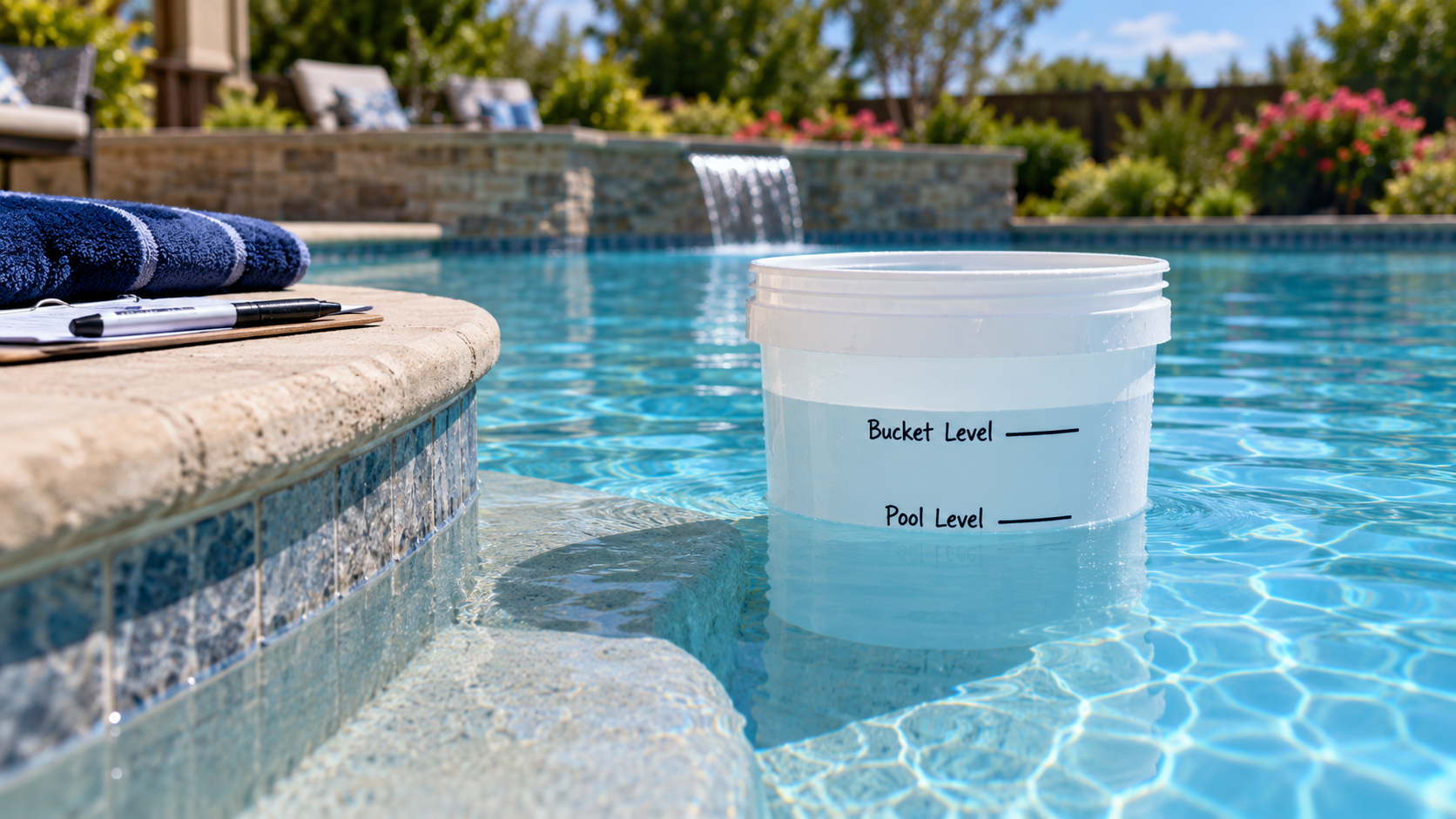
Here's the part that tends to get overlooked until the bill arrives. A pool losing even a quarter inch of water per day can add up to thousands of gallons lost over a month, and commercial water rates in Mississippi aren't cheap at that volume.
Beyond the direct cost of lost water, there's the damage a leak can cause underneath the surface. Water finding its way under a pool deck or into a building's foundation can lead to cracking, settling, and repair costs that dwarf what the original leak detection service would have cost.
A liability issue can develop too. A soft or eroded deck area near a pool is a slip and fall risk, and if that erosion traces back to a leak your team knew or should have known about, that's a harder position to defend if an incident happens.
What to Expect From a Commercial Leak Detection Service
Here's how our process typically works for commercial properties in the Hattiesburg area.
- Initial assessment and history review. We talk through water bill trends, maintenance logs, and any visible signs your team has already noticed.
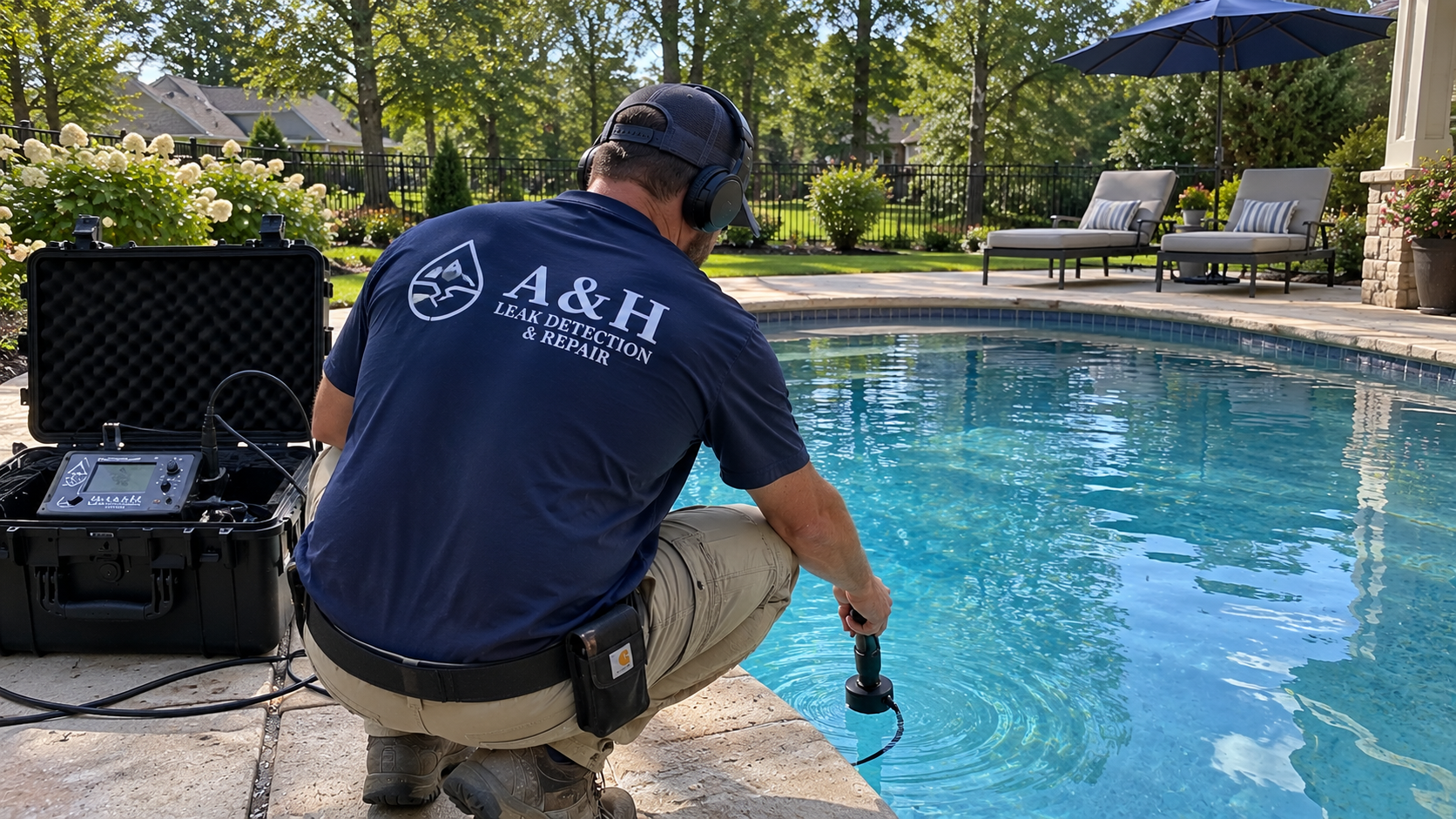
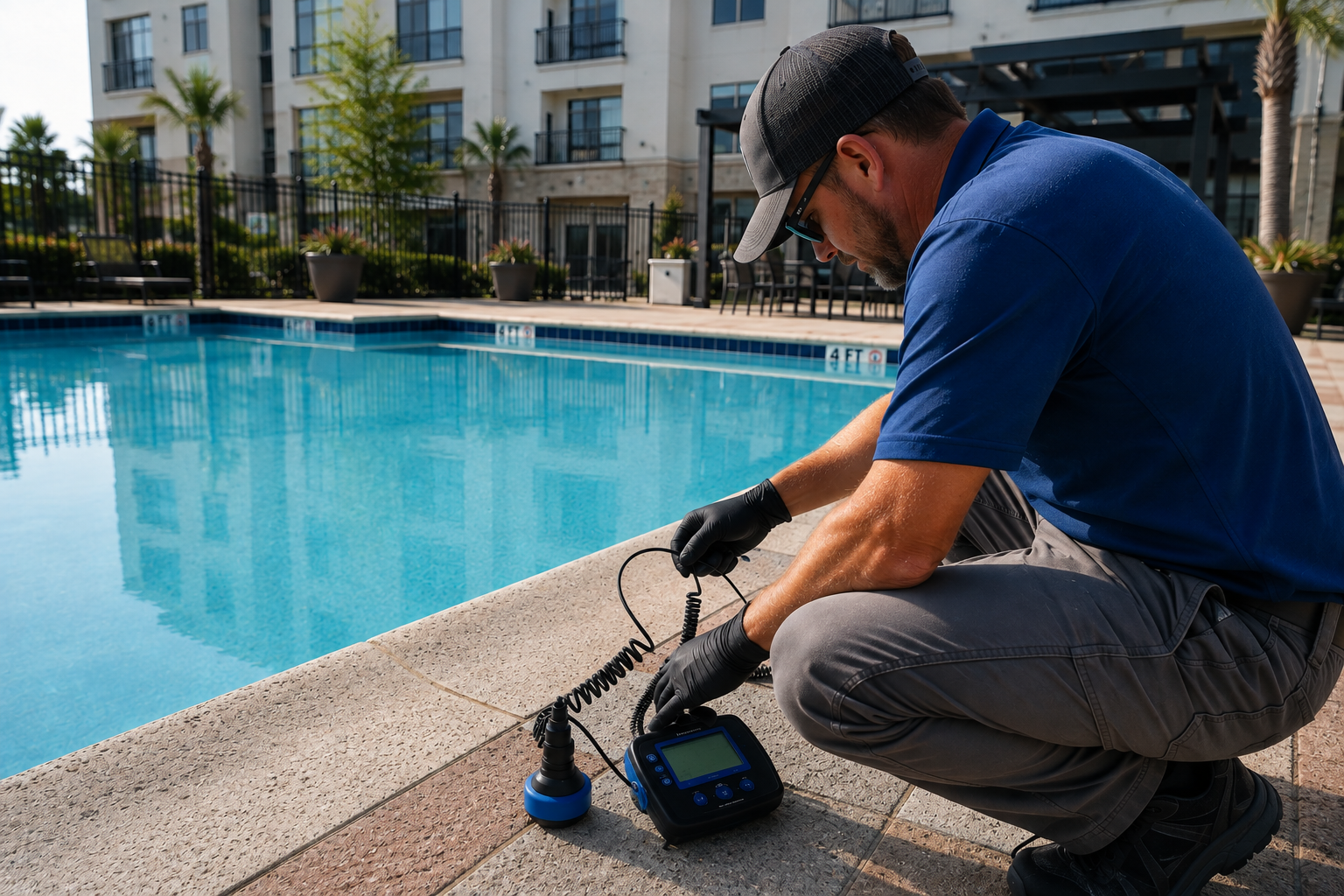
- Non-invasive testing. Using pressure testing and acoustic equipment, we check plumbing lines, skimmers, main drains, and pool surfaces without tearing up decking or landscaping unless it's truly necessary.
- Pinpointing the source. Once we've narrowed down the general area, we use precision equipment to identify the exact location of the leak.
- Clear repair recommendations. We walk your team through what we found, what it will take to fix it, and what the options are if there's more than one way to address it.
- Emergency service when needed. For active leaks causing ongoing water loss or damage, we offer emergency response so a commercial property isn't waiting days for a fix.
Most commercial assessments can be scheduled quickly, and because our methods are non-invasive, we're able to work around a property's operating hours with minimal disruption to guests or residents.
Building a Prevention Routine for Multi-Pool or Multi-Building Properties
For properties managing more than one pool or amenity area, a little routine tracking goes a long way toward catching problems early.
- Log water levels weekly, not just when someone happens to notice it looks low
- Track water bills month over month, comparing against the same period the prior year
- Schedule a professional inspection annually, even without an obvious problem, especially for older pools or plumbing
- Train maintenance staff to spot early warning signs, like soft deck areas or unexplained chemical imbalances
- Keep a simple log accessible to whoever's on shift, so a slow leak doesn't slip through the cracks during staff turnover
Frequently Asked Questions
How much water loss is normal for a commercial pool due to evaporation?
Evaporation typically accounts for about a quarter inch of water loss per day, though this varies with weather, pool size, and whether the pool is covered when not in use. Loss beyond that range, especially if it's consistent regardless of weather, points toward a leak rather than evaporation alone.
Can you detect leaks without draining the pool or shutting it down?
In most cases, yes. Our non-invasive methods, including pressure testing and acoustic detection, allow us to locate leaks while the pool stays operational, which matters for hotels and apartment complexes that can't afford extended downtime.
Do you offer emergency service for commercial properties?
Yes. Active leaks causing significant water loss or property damage can escalate quickly, so we offer emergency response for commercial clients dealing with urgent situations.
How often should a commercial pool be inspected for leaks?
We recommend an annual professional inspection at minimum, with more frequent checks for older pools, high-usage properties, or any pool that's shown signs of water loss in the past.
What's the difference between commercial and residential leak detection?
The underlying detection methods are similar, but commercial properties often involve larger plumbing systems, multiple pools or amenities, and a need to minimize disruption to guests or residents. Our approach accounts for those differences when scheduling and conducting the assessment.
Will a leak affect our pool's water chemistry?
Yes, often. A leak constantly introduces fresh water into the pool, which can throw off chlorine levels, pH balance, and other chemistry readings. If your team keeps seeing chemistry issues that don't resolve with normal treatment, a leak could be the underlying cause.
If your property's water bills don't add up or your maintenance team keeps chasing the same chemistry issues without a clear fix, it may be time for a professional look. Call A & H Leak Detection & Repair to schedule a commercial pool leak assessment and protect your property before a small leak turns into a much bigger problem.
{ "@context": "https://schema.org", "@graph": [ { "@type": "Article", "headline": "How Commercial Property Managers in Hattiesburg Can Catch Pool Leaks Before They Become a Liability", "author": { "@type": "Organization", "name": "A & H Leak Detection & Repair" }, "publisher": { "@type": "Organization", "name": "A & H Leak Detection & Repair" }, "mainEntityOfPage": { "@type": "WebPage", "@id": "https://www.ahpoolleakdetection.com/blog/how-commercial-property-managers-in-hattiesburg-can-catch-pool-leaks-before-they-become-a-liability" } }, { "@type": "FAQPage", "mainEntity": [ { "@type": "Question", "name": "How much water loss is normal for a commercial pool due to evaporation?", "acceptedAnswer": { "@type": "Answer", "text": "Evaporation typically accounts for about a quarter inch of water loss per day, though this varies with weather, pool size, and whether the pool is covered when not in use. Loss beyond that range, especially if it's consistent regardless of weather, points toward a leak rather than evaporation alone." } }, { "@type": "Question", "name": "Can you detect leaks without draining the pool or shutting it down?", "acceptedAnswer": { "@type": "Answer", "text": "In most cases, yes. Our non-invasive methods, including pressure testing and acoustic detection, allow us to locate leaks while the pool stays operational, which matters for hotels and apartment complexes that can't afford extended downtime." } }, { "@type": "Question", "name": "Do you offer emergency service for commercial properties?", "acceptedAnswer": { "@type": "Answer", "text": "Yes. Active leaks causing significant water loss or property damage can escalate quickly, so we offer emergency response for commercial clients dealing with urgent situations." } }, { "@type": "Question", "name": "How often should a commercial pool be inspected for leaks?", "acceptedAnswer": { "@type": "Answer", "text": "We recommend an annual professional inspection at minimum, with more frequent checks for older pools, high-usage properties, or any pool that's shown signs of water loss in the past." } }, { "@type": "Question", "name": "What's the difference between commercial and residential leak detection?", "acceptedAnswer": { "@type": "Answer", "text": "The underlying detection methods are similar, but commercial properties often involve larger plumbing systems, multiple pools or amenities, and a need to minimize disruption to guests or residents. Our approach accounts for those differences when scheduling and conducting the assessment." } }, { "@type": "Question", "name": "Will a leak affect our pool's water chemistry?", "acceptedAnswer": { "@type": "Answer", "text": "Yes, often. A leak constantly introduces fresh water into the pool, which can throw off chlorine levels, pH balance, and other chemistry readings. If your team keeps seeing chemistry issues that don't resolve with normal treatment, a leak could be the underlying cause." } } ] } ]
}
.svg)