.svg)


Buying a Home With a Pool in Hattiesburg? What a Pre-Purchase Pool Inspection Checks
October 14, 2026
Read more
Ceiling leaks, wall leaks, and water main breaks can all mimic pool water loss. A & H Leak Detection & Repair explains how to find the real source.
Losing an inch of water a week feels like a pool problem. Most of the time it is, but not always, and that distinction matters more than people realize. At A & H Leak Detection & Repair, we get called out across Hattiesburg for water loss that homeowners assume is coming from a cracked shell or a bad skimmer, only to find the real source is something connected to the house itself, not the pool at all.
Ceiling leaks, wall leaks, and water main leaks are three of the most misdiagnosed culprits behind ongoing water loss, and each one behaves differently enough that guessing at the cause usually wastes time and money before anyone finds the actual problem.
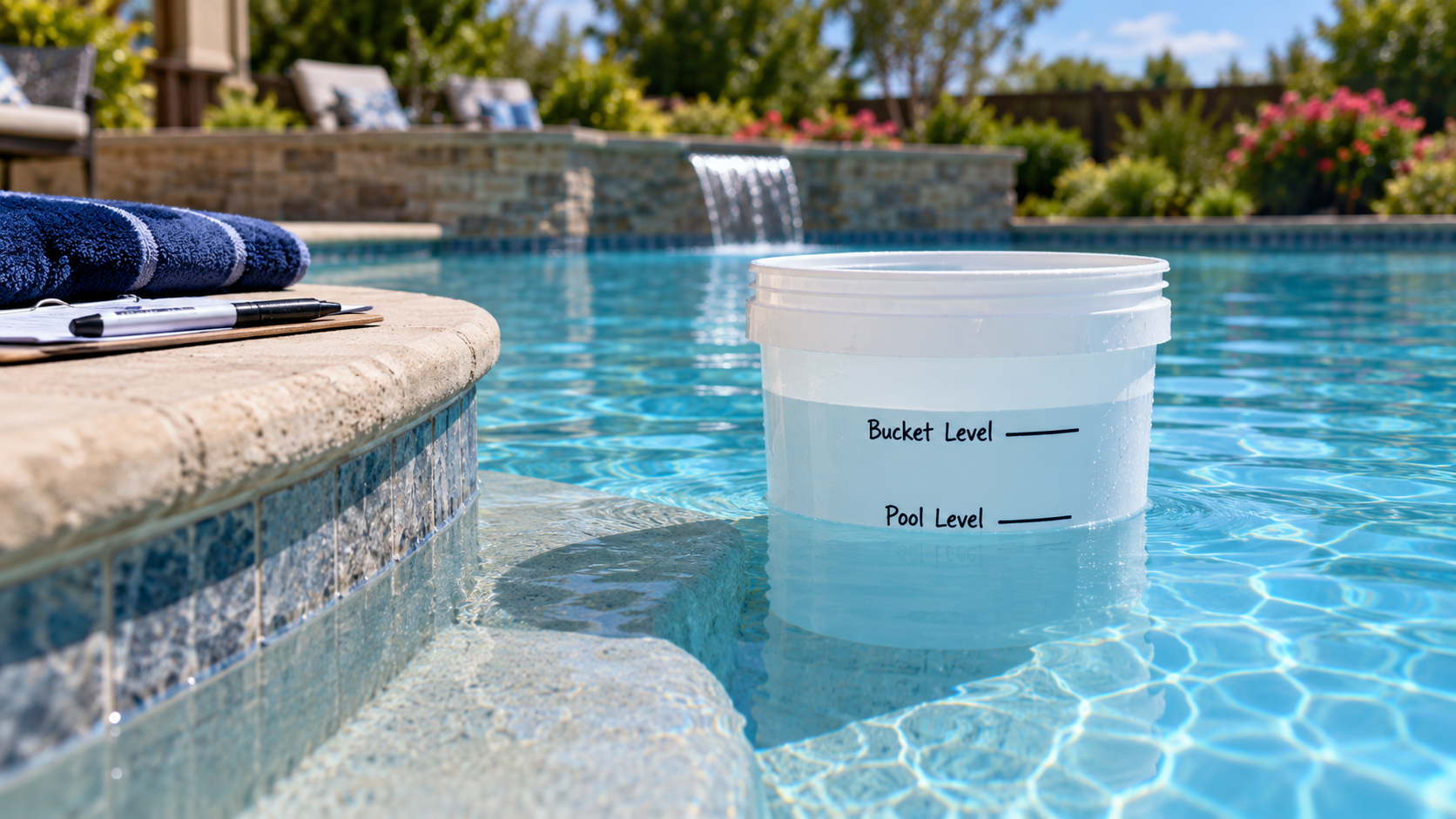
Most homeowners run a bucket test, confirm the pool is indeed losing more water than evaporation alone would explain, and jump straight to assuming a plumbing line under the pool deck or a crack in the shell. That is a reasonable first guess, but it skips over a category of leaks that have nothing to do with the pool structure at all.
If your pool sits near the house, or if there is a pool house, cabana, or covered patio structure nearby with any plumbing running through it, a ceiling or wall leak in that structure can show up as pool water loss simply because the water is draining somewhere you cannot see it. Same with a water main leak feeding the property. The meter keeps running, water disappears into the ground, and the pool gets blamed because that is the most visible place water seems to be missing.
If your property has a covered pool structure, pool house, or an attached patio roof with plumbing running above it, a ceiling leak can be shockingly easy to miss. Water traveling along a ceiling line before it drips down does not always show up directly beneath the source, which throws off where people look for damage.
A ceiling leak often shows itself through indirect signs before there is any visible dripping. A slightly discolored stain spreading across drywall or a ceiling tile. A musty smell that was not there before. Paint that has started to bubble or peel in one specific area. Any of these, especially near a structure that shares plumbing with the pool equipment or fill line, is worth investigating before assuming the pool itself is the source of the loss.
The tricky part with ceiling leaks connected to pool systems is that the water loss reads exactly like a pool leak on a bucket test, since water is genuinely disappearing from the system. The difference only becomes clear once someone traces the actual plumbing path rather than assuming the shell or the visible pool equipment is where the problem lives.
Wall leaks tend to be even sneakier than ceiling leaks because the damage often develops behind a finished surface for a long stretch before anything becomes visible from the outside. A pipe running through an interior or exterior wall near the pool equipment room, a pool house bathroom, or an outdoor kitchen area can develop a small leak that takes weeks or months to produce a noticeable sign.
What we see most often is a slight softness in drywall, a baseboard that has started to warp or separate, or in more advanced cases, actual mold growth along the base of a wall. Outside, a wall leak sometimes shows up as an unusually damp or discolored patch of stucco or siding, even during a stretch without rain.
Because wall leaks are so gradual, water bills tend to be the first real clue something is wrong, since the increase happens slowly enough that a monthly bill comparison catches it before visible wall damage does. If your water usage has been creeping up for a couple of billing cycles without an obvious reason like extra pool refills, that trend is worth paying attention to.
A water main leak is a different animal entirely, and it is one of the most common reasons a pool gets blamed for water loss that has absolutely nothing to do with pool plumbing. The main line feeding your property from the street or well system can develop a leak underground, often in a spot with no visible surface sign at all, especially in Hattiesburg's clay heavy soil where a leak can travel some distance before surfacing.
A water main leak usually shows up in ways that feel disconnected from the pool at first. An unusually green or lush patch of yard in one specific area, even during dry weather. A section of driveway or walkway with a small crack or slight settling that was not there before. A hissing or trickling sound near the water meter when everything in the house and pool system is off.
The giveaway that separates a water main leak from an actual pool leak is the water meter itself. If you shut off the pool's autofill valve completely and the meter is still spinning, the loss is coming from somewhere in the main line feeding the property, not the pool.
A basic bucket test tells you whether you are losing more water than evaporation accounts for, but it does not tell you where that water is going. Getting a real answer usually comes down to a process of elimination.
If more than one of these points to something outside the pool structure itself, it is worth having a professional trace the actual source before spending money on pool-specific repairs that were never going to fix the real problem.
We understand the instinct to patch the most obvious suspect first, especially when a pool repair feels like the more familiar fix. The problem is that if the real source is a wall leak or a water main break, that money gets spent without addressing the actual loss, and the water bill or damage keeps climbing while the pool itself was never the issue.
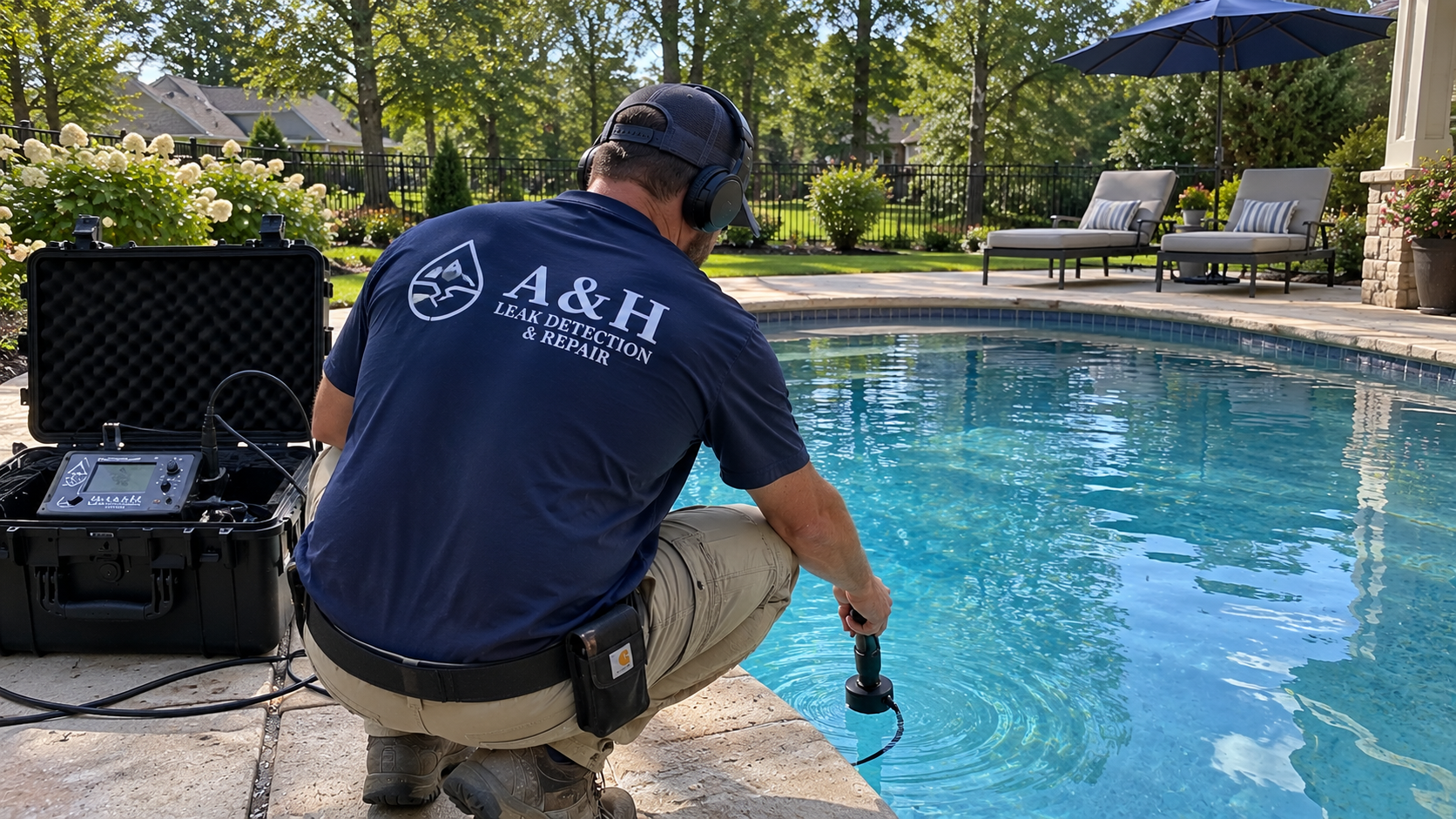
Electronic leak detection equipment can trace water movement through walls, under slabs, and along main lines without tearing into drywall or digging up a yard blindly. That kind of targeted diagnosis is what actually saves money over time, even though it can feel like an extra step when all you want is for the water loss to stop.
Shut off your pool's autofill valve completely, then check the water meter. If the meter is still moving with the pool isolated, the loss is coming from another part of the plumbing system rather than the pool itself.
Common signs include a spreading stain on drywall or ceiling tiles, bubbling or peeling paint, and a musty smell in a covered structure near the pool. Water can travel along a ceiling before dripping down, so the stain does not always sit directly below the actual source.
A water main leak itself does not drain the pool directly, but it inflates your overall water usage and bill in a way that gets mistakenly attributed to the pool. Ruling out the main line with a meter check is an important step before assuming the pool structure is at fault.
Wall leaks can develop for weeks or even months before becoming visible, since the damage often starts behind a finished surface. A gradual rise in water bills is frequently the earliest reliable indicator, sometimes appearing before any visible wall damage does.
Yes, in almost every case. Electronic detection traces the actual leak location without unnecessary demolition, which saves both money and time compared to guessing at a wall or slab section and hoping the leak happens to be right there.
This is a common sign of an underground water main leak, particularly in Hattiesburg's clay soil where leaking water can pool near the surface in a specific spot rather than draining away evenly. It is worth having that area checked before assuming it is unrelated to your water loss.
Water loss around a pool is rarely as simple as it first appears, and treating every drop as a pool problem can send you chasing a repair that was never going to solve anything. Ceiling leaks, wall leaks, and water main breaks all mimic pool water loss in their own way, and telling them apart takes more than a bucket test.
If your pool has been losing water and you are not confident the pool itself is actually the source, A & H Leak Detection & Repair serves Hattiesburg and the surrounding area with the equipment and experience to trace it accurately. Reach out to schedule a consultation and let us find out exactly where your water is going.